The Hidden Breakpoints in Multifamily Pricing Workflows
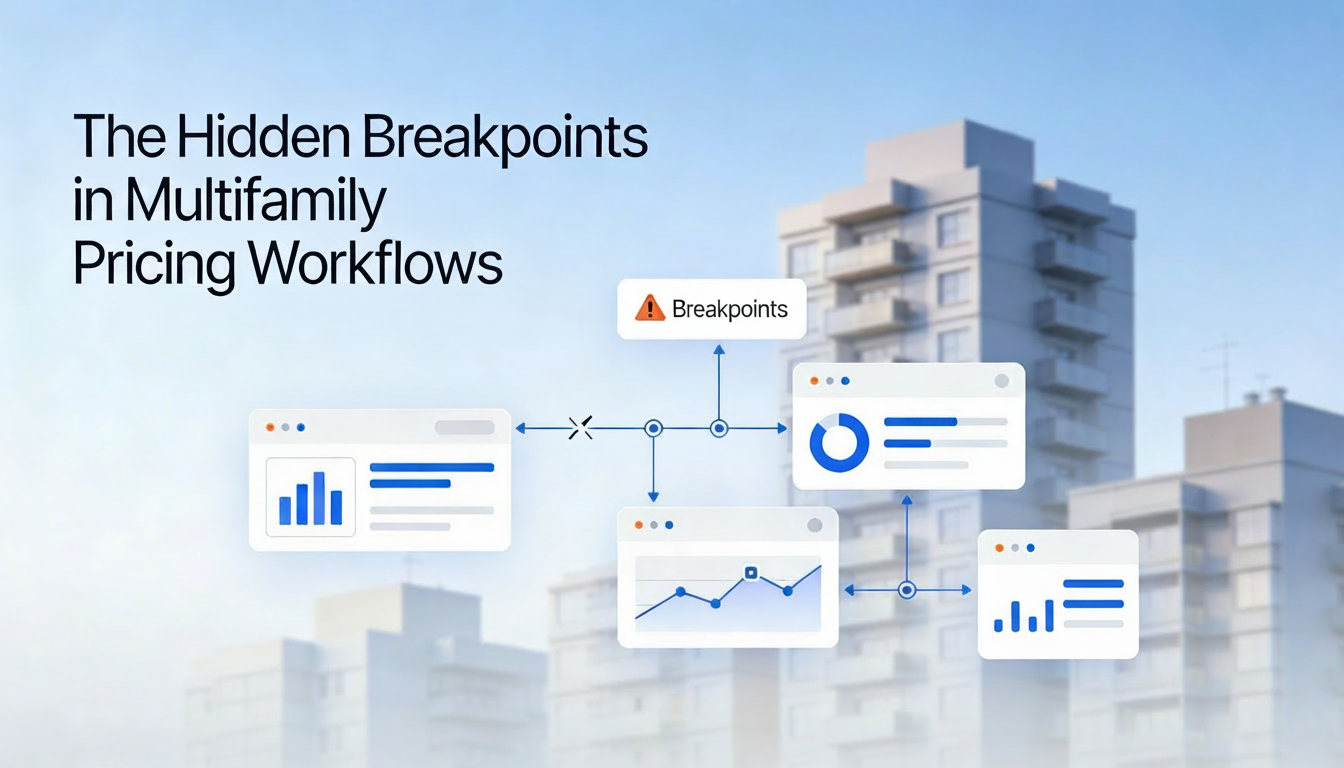
Most pricing workflows fail long before the final rent number is chosen.
A pricing team assembles comp data. A revenue manager reviews market trends. An asset director approves the final number. But somewhere between data collection and final decision, the workflow quietly breaks.
These breakpoints aren't obvious. They're embedded in how teams gather information, debate assumptions, and execute pricing. And they cost real money.
Where Pricing Workflows Actually Break
The typical multifamily pricing process still depends on manual handoffs.
Screenshots from listing sites get shared via email. Comps are compiled in spreadsheets passed between departments. Market surveys happen monthly, if they happen at all.
Each handoff creates opportunity for:
Data errors and version control issues
Delays in decision-making
Inconsistent pricing logic across units
According to multifamily underwriting experts, automated workflows can surface data mismatches immediately, comparing rent roll aggregates against operating statements and flagging units with missing information. Without automation, teams waste hours building models only to discover problems buried deep in the data, problems that should have been caught at intake.
The Data Blind Spot
Even when workflows are efficient, the data itself is incomplete.
Most operators rely on public listing data. The problem? Public listings show asking rent, not achieved rent. Static comp sheets fail to capture real-time market shifts. Historical averages ignore unit-level differences that materially affect pricing.
As discussed in this comprehensive guide to revenue management strategies, revenue teams consistently struggle to obtain local market data that is both detailed and accurate. National reports and manual research fall short, lacking the comprehensive insights needed for effective pricing decisions.
Real-time market intelligence makes the difference between reactive and strategic pricing. Properties that leverage both current and historical insights gain agility, they can respond swiftly to market dynamics while using trend data for long-term planning.
Without this dual approach, pricing becomes guesswork dressed up as strategy.
The Execution Gap
Even with good data and efficient workflows, there's a third breakpoint: execution timing.
Dynamic pricing isn't just about numbers, it's about timing and perception. Peak demand periods justify premium rates, while strategic adjustments during slower seasons maintain occupancy.
But most teams lack the tools to execute this in real-time, leaving revenue on the table during high-demand windows and struggling with vacancies when the market softens.
According to industry experts on multifamily KPIs, patterns in vacancy reveal mismatches between what you're charging and what the market is accepting. Sometimes a small tweak, like adjusting your top-floor amenity
premium, is all it takes to decrease vacant days and bring in rental income on a unit sooner.
Stop Breaking. Start Precision Pricing.
The hidden breakpoints in pricing workflows aren't mysterious. They're predictable consequences of:
Manual processes
Fragmented data
Delayed insights
The solution isn't working harder within broken systems. It's redesigning workflows around automation, real-time intelligence, and strategic agility.
TraceRent addresses these breakpoints by bringing data-driven rent pricing to the multifamily industry, automating market insights so teams can price competitively in real-time, reduce vacancies, and eliminate manual market surveys.
Get the exact rent for your next vacancy at TraceRent.ca